

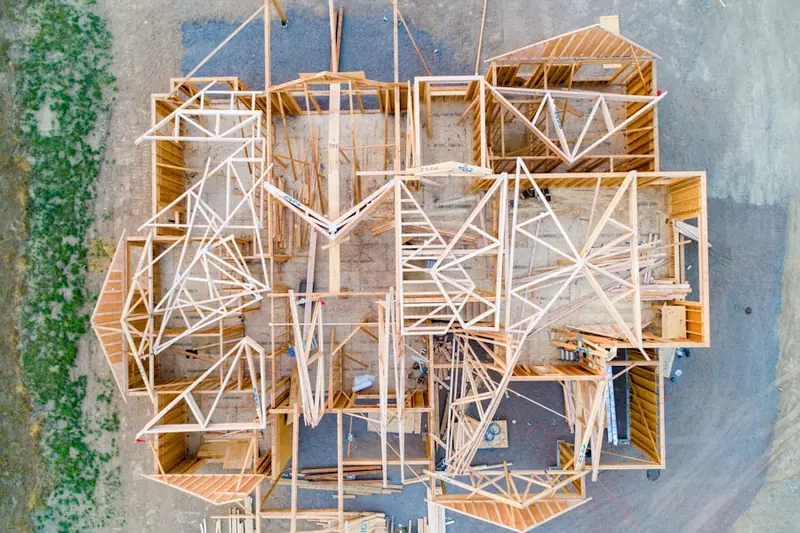
Buying a new construction home feels straightforward — pick a floor plan, choose your finishes, wait for it to be built. In practice, it involves a purchase contract that heavily favors the builder, a design center process that can add tens of thousands of dollars to your cost, and a construction timeline that rarely matches what was initially promised. None of that makes new construction a bad choice — it just means the preparation that matters happens before you sign, not after.
This guide covers the process from contract through closing so you know what to expect and where to pay attention.
The Builder’s Contract Is Not Standard
The first thing to understand is that builder purchase agreements are written by the builder’s attorneys to protect the builder. They are not the standard Alabama residential purchase contract used in resale transactions. Key differences:
Earnest money is typically larger and less refundable. Builder contracts often require 1–3% of the purchase price as earnest money, sometimes more for custom or semi-custom homes. The conditions under which that money is returned to you if the deal falls apart are narrower than in a resale contract. Read the default and termination clauses carefully.
The builder controls the timeline. Completion dates in builder contracts are typically estimates, not guarantees. Most contracts include language allowing the builder to extend the closing date with limited notice and without penalty. Rate locks, temporary housing, and moving logistics all need to account for timeline flexibility.
Price is fixed but scope can shift. The contract price is locked for the base home and any selected upgrades, but changes after signing — even small ones — often require formal change orders at retail pricing. Additions are almost always more expensive mid-build than at the design center stage.
The builder’s lender is often incentivized. Many builders offer closing cost credits or upgrade allowances contingent on using their preferred lender. Those incentives are real and sometimes significant, but the preferred lender’s rate and terms should still be compared against outside lenders. The credit doesn’t help you if the rate is materially higher over the life of the loan.
Representation: Bring Your Own Agent
Builder sales agents work for the builder. They are professional, knowledgeable about the community, and will walk you through the process — but their fiduciary duty is to the seller. Having your own agent costs you nothing (the builder pays the buyer’s agent commission as part of the transaction) and gives you someone in your corner during contract negotiation, change order review, and the closing process.
One important note: most builders require that you register your agent on your first visit. If you tour a model home without an agent and return later, the builder may refuse to allow agent representation. If you are considering a new construction community, bring your agent from the start.
Ready to tour? Schedule a time to visit new construction communities together and we’ll make sure you’re registered and represented from day one.
The Design Center
For production builders, the design center visit is typically scheduled shortly after contract. This is where you select flooring, countertops, cabinetry, fixtures, appliances, and other finishes from the builder’s curated options. It is also where new construction budgets most often run over.
A few things to know going in:
Base pricing is for base finishes. The price you signed the contract for includes the builder’s standard-grade finishes. Anything above that is an upgrade, priced at retail or above. Hardwood flooring upgrades, quartz countertops, upgraded cabinetry, and tile showers are common line items that can add $20,000–$50,000+ to the purchase price if you’re not deliberate about priorities.
Not every upgrade is worth paying the builder’s price. Some upgrades — particularly structural ones like adding a bedroom, extending a garage, or upgrading the electrical panel — are far cheaper to do at the builder’s pricing than to modify after closing. Others, like light fixtures, ceiling fans, and window treatments, are often more cost-effective to purchase and install after closing through outside vendors.
Structural options close first. Decisions about layout changes, room additions, and structural modifications typically must be made before framing. Finish selections can often be made later. Know the decision order before your design center appointment and prioritize accordingly.
Get every selection in writing. After the design center visit, request a full selection sheet documenting every choice and upgrade with pricing. Review it carefully before signing off — errors are easier to correct before the materials are ordered.
Construction Timeline
Baldwin County production builders are typically building on timelines of 6–10 months from contract to closing for standard production homes, though this varies by builder, community, and current demand on subcontractors. Semi-custom and custom homes run longer.
Things that extend timelines:
- Material supply delays (lumber, windows, appliances, and HVAC equipment have all experienced periodic delays in recent years)
- Subcontractor availability — framing, electrical, plumbing, and HVAC crews are shared across multiple active communities
- Permit and inspection sequencing — Baldwin County requires inspections at multiple phases and the schedule depends on county availability
- Weather — extended wet periods slow site work and concrete pours
Plan your rate lock, lease end date, and moving arrangements with a buffer. A builder telling you “7 months” should be treated as a best-case estimate for planning purposes.
Builder Incentives
Builders use incentives to move inventory and manage community pace. Common incentives:
Closing cost credits contingent on using the builder’s preferred lender. These can run $5,000–$15,000+ on larger homes. Worth taking seriously — but compare the preferred lender’s rate against at least one outside quote before committing.
Rate buydowns offered through the builder’s lending partner. Temporary buydowns (2-1 buydowns are common) reduce your payment for the first two years. Permanent rate buydowns to below-market rates are sometimes available on spec homes the builder wants to close quickly.
Spec home discounts. Completed or near-complete spec homes that haven’t sold give builders both carrying cost and a gap in their community production schedule. These can be negotiated more aggressively than a build-to-order contract, and you get a faster closing. The tradeoff is you take the finishes as-is or with limited selection options.
Lot premiums. Most communities have premium lots — corner lots, cul-de-sac lots, pond-view or water-view lots. These carry additional cost on top of the base price. Premium lots may hold value better on resale, but they also represent more capital at risk if the market softens.
Caveat Emptor Does Not Apply to New Construction
This is an important legal distinction for Alabama buyers: caveat emptor — the “buyer beware” doctrine that governs resale transactions in Alabama — does not apply to newly built homes that have never been occupied. Alabama courts have established an implied warranty of habitability for new construction. Builders must deliver a home that is structurally sound and fit for habitation, regardless of what the purchase contract says.
This does not mean new construction is problem-free — it means your legal protections as a new-home buyer are stronger than they would be buying a resale property in Alabama. You still need an independent inspection (see below), but you are not relying solely on caveat emptor protections that put the full burden of discovery on you.
New Home Warranties
New construction homes in Alabama come with builder warranties required by the Alabama New Home Warranty Act. The statutory minimum coverage:
- 1 year — defects in workmanship and materials
- 2 years — defects in mechanical systems (electrical, plumbing, HVAC)
- 10 years — major structural defects
Many production builders also offer their own warranty programs that mirror or exceed these minimums. Review the warranty documentation at closing and understand the claim process before you need it.
Third-party inspections are still worth it. A new home warranty doesn’t replace the value of an independent inspection. Builders build many homes simultaneously; mistakes happen. A pre-drywall inspection — done after framing, electrical, plumbing, and HVAC rough-in but before walls are closed — is your best opportunity to catch issues that will be hidden after closing. A final walkthrough inspection before closing catches punch list items that the builder may otherwise rush through.
The Pre-Closing Walkthrough
Builders schedule a formal walkthrough shortly before closing. This is your opportunity to document anything that doesn’t meet the contract specifications or is visibly defective. Bring a checklist and take your time. Common items:
- Paint touch-ups and wall damage
- Flooring gaps, scratches, or installation defects
- Cabinet and trim alignment
- Window and door function
- Grading and drainage around the foundation
- Appliance operation
- All outlets, switches, and fixtures functional
Items identified during the walkthrough go on a punch list the builder commits to completing before or shortly after closing. Get the punch list in writing and confirm the timeline for completion. Items left unresolved at closing are harder to get done after you’ve moved in.
Competing for Spec Homes: naf Cash
Completed and near-complete spec homes in desirable Baldwin County communities sometimes attract multiple interested buyers. The naf Cash program allows qualified buyers to make non-contingent, cash-equivalent offers — the property closes as cash from the builder’s perspective while you still use mortgage financing. For spec home situations where the builder wants certainty of close, removing the financing contingency is a meaningful advantage. Verify current program limits and eligibility directly with New American Funding. Get in touch to discuss whether this applies to your search.
Additional Resources
- New Construction Communities in Baldwin County — active communities by area
- New Construction vs. Resale — how to decide which fits your situation
- New Construction Financing — builder lenders, rate locks, construction-to-perm, and how to evaluate incentive packages
- New Construction Buyer Checklist — stage-by-stage reference from contract through post-closing
- Alabama Closing Cost Estimator — budget closing costs on a new construction purchase
- Mortgage Payment Calculator — estimate your monthly payment at current rates
- FHA vs. Conventional Calculator — compare loan types for your down payment and credit profile
Evaluating a builder contract or considering a new construction community?
I work regularly with buyers across Baldwin County's new construction market. Get in touch before you sign anything — I'll review the contract with you, walk through the design center process, and make sure you're registered for representation from day one. No cost to you.
Get in Touch →This guide is provided for informational and educational purposes only. Builder contract terms, warranty coverage, incentive programs, and construction timelines vary by builder and community. Review all contracts with an attorney before signing. This does not constitute legal, financial, or tax advice.
Milton Christ, REALTOR® | naf Cash Certified | Keller Williams Alabama Gulf Coast | AL License #172097