BRRRR — Buy, Rehab, Rent, Refinance, Repeat — is a real estate investment strategy built around one idea: acquire a distressed or undervalued property, force appreciation through renovation, stabilize it as a rental, then refinance to pull your capital back out and redeploy it into the next deal.
Done correctly, BRRRR can allow an investor to build a rental portfolio while recycling the same initial capital across multiple properties — rather than leaving that capital permanently tied up in one deal. Done incorrectly, it can leave an investor over-leveraged in a property that doesn’t cash flow, with capital they can’t recover.
This guide covers the full BRRRR process, the math behind it, and what makes it work — and fail — on Alabama’s Gulf Coast.
How BRRRR Works: The Five Steps
Step 1 — Buy
BRRRR starts with acquisition below market value. You are not buying a retail-priced property and hoping for appreciation. You are buying a property with a verifiable discount to its after-repair value (ARV) — the market value of the property once renovated to rentable condition.
The 70% Rule is the standard acquisition filter for BRRRR:
Maximum Allowable Offer (MAO) = ARV × 70% − Estimated Rehab Cost
Example: If a property has an ARV of $180,000 and needs $25,000 in rehab, the MAO is ($180,000 × 0.70) − $25,000 = $101,000.
The 70% threshold exists to create the equity buffer that makes refinancing work. If your all-in cost (purchase + rehab + carrying costs) stays below 75% of ARV, you will be able to refinance at 75% LTV and recover your invested capital. The 70% target provides margin for rehab overruns and appraisal variance.
Where to find BRRRR properties on the Gulf Coast:
- Foreclosure auctions — Mobile County probate court and online auction platforms
- Estate sales and probate properties — older housing stock that has not been updated; often priced based on original value, not current market
- Off-market direct mail and networking — distressed sellers who haven’t listed
- MLS distressed listings — properties listed as-is, with deferred maintenance disclosed
- Wholesalers — investors who acquire properties under contract and assign them; verify the ARV and rehab estimate independently; do not take wholesaler numbers at face value
Financing the purchase: Most BRRRR acquisitions are funded with cash, hard money, or private lender financing — conventional lenders typically will not lend on properties with significant deferred maintenance. Hard money rates in Alabama currently run 10–14% interest with 1–3 points, on 6–12 month terms. Factor carrying costs (interest payments during rehab and lease-up) into your total cash requirement.
Step 2 — Rehab
The rehab has one objective: bring the property to rentable condition that supports the ARV you used to underwrite the deal. You are not renovating to your personal taste. You are renovating to market standard for the rental submarket and price point.
Scope of work principles:
- Match finishes to the rental market. A working-class long-term rental in midtown Mobile does not need quartz countertops. A premium long-term rental in west Mobile might. Know the market.
- Fix everything structural and mechanical first: roof, foundation, HVAC, electrical, plumbing. These are not optional and they will fail inspection or tenant lease-up if ignored.
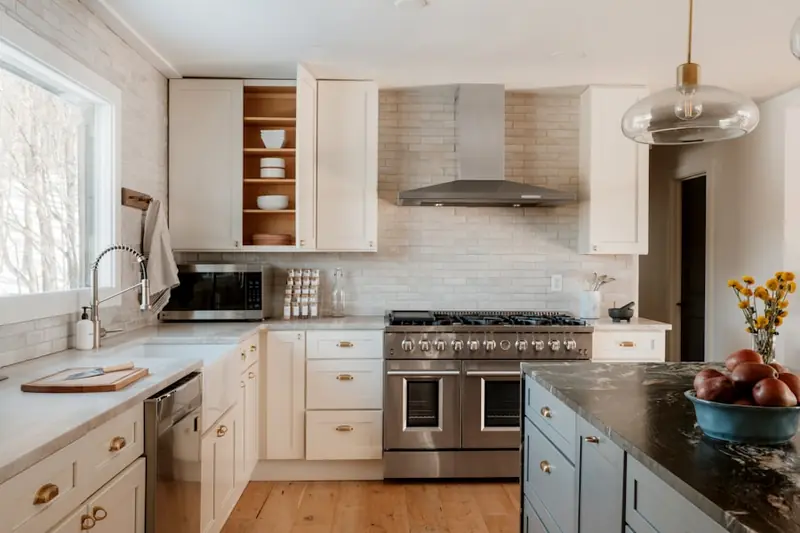
- Cosmetic improvements with the highest rent premium per dollar: kitchen (countertops, cabinet faces, appliances), bathrooms (fixtures, flooring, vanity), and fresh paint throughout.
Gulf Coast-specific rehab considerations:
HVAC: Gulf Coast humidity is exceptionally hard on HVAC systems. If the unit is more than 10–12 years old, budget for replacement. A tenant in a property with a failing HVAC in July will not stay. Include a dehumidifier or properly sized system for the square footage — undersized systems run constantly and still fail to cool.
Roof: Insurance carriers on the Gulf Coast often refuse to write new policies on roofs older than 15–20 years, or charge substantially higher premiums. Verify the roof age before acquisition; a needed roof replacement should be in your rehab budget, not discovered post-closing.
Moisture and mold: Inspect thoroughly for moisture intrusion, particularly in crawl spaces, attics, and around windows. Gulf Coast humidity creates conditions where minor moisture issues become significant mold problems quickly. Remediation costs can exceed $10,000 if not caught.
Flood zone: If the property is in an AE or VE flood zone, factor flood insurance cost into your operating expense model before acquisition. Flood insurance in designated zones can run $2,000–$6,000+/year and directly affects cash flow and refinance qualification.
Contingency: Build a 15–20% contingency on top of your rehab estimate. Properties that have been neglected or vacant frequently reveal additional issues during renovation. Investors who budget without contingency regularly go over.
Step 3 — Rent
Before you refinance, the property must be stabilized — rented to a qualified tenant at or above your underwritten rent. Lenders require an executed lease and, often, evidence of the first rent payment before approving a cash-out refinance.
Tenant placement: If you are not local or are managing multiple properties, use a professional property management company for placement. Tenant quality directly affects the performance of the asset — a bad placement creates eviction costs, vacancy, and potential property damage that eats months of cash flow.
A full-service property management company in Mobile County will typically charge 50–100% of the first month’s rent for placement and 8–10% of monthly collected rent for ongoing management. Factor this into your cash flow model from day one.
Stabilization period: Most conventional lenders require 6–12 months of seasoning on a cash-out refinance — meaning the property must be in your name and rented for that period before you can refinance. Some DSCR lenders will move faster. Know your lender’s seasoning requirement before you buy, because it affects how long your capital is tied up and what your total carrying cost will be.
Step 4 — Refinance
The refinance is where BRRRR either works or doesn’t. The goal is to refinance at 75% of the appraised after-repair value and use the proceeds to pay off your acquisition/rehab financing and recover as much of your invested capital as possible.
Standard investment property refinance terms:
- Loan-to-value: 75% (standard for non-owner-occupied investment property)
- Credit score minimum: typically 680+
- Debt-service coverage ratio (DSCR): most lenders want monthly rent ≥ 1.20× monthly PITI
- Documentation: 2 years tax returns, current lease, rent roll, insurance, appraisal
The BRRRR math:
Using the example above (ARV $180,000, rehab $25,000, purchase $101,000):
| After-repair value | $180,000 |
| Refinance at 75% LTV | $135,000 |
| Total cash invested (purchase + rehab + carrying) | ~$130,000 |
| Capital recovered at refinance | $135,000 − existing debt payoff |
If you purchased with cash ($101,000) and spent $25,000 on rehab plus $4,000 in carrying costs, your total investment is $130,000. A $135,000 refinance pays off nothing (you own it free and clear) and puts $135,000 back in your pocket — you recover more than you invested. This is the “infinite return” scenario.
If your all-in cost runs over — say $145,000 — you recover $135,000 and leave $10,000 in the deal. That’s still a good outcome if the remaining equity and cash flow justify it.
What kills the refinance:
- Appraisal comes in below expected ARV — the most common failure point. Have the ARV independently verified before you buy, not after you renovate.
- Property doesn’t cash flow at 75% LTV — if the new mortgage payment is too high relative to rent, the DSCR won’t qualify. Model this before acquisition.
- Seasoning requirements you didn’t plan for — capital is tied up longer than expected, increasing carrying costs.
Step 5 — Repeat
The capital recovered at refinance funds the next acquisition. In a clean BRRRR execution, you are redeploying the same pool of capital across multiple properties — each generating its own cash flow, building its own equity, and eventually funding another acquisition.
Scaling BRRRR requires: a reliable deal source, consistent contractor relationships, a property management system (or company), and the financial profile to qualify for multiple investment property loans simultaneously. Lenders cap the number of conventional investment property loans at 10 for most borrowers; DSCR and portfolio loans are available beyond that limit.
BRRRR vs. Traditional Buy-and-Hold
| BRRRR | Traditional Buy-and-Hold | |
|---|---|---|
| Acquisition | Distressed / below market | Market-rate or close to it |
| Capital requirement | High upfront, partially recovered | Lower upfront, fully committed |
| Execution risk | Higher (rehab, refinance) | Lower |
| Yield potential | Higher (forced appreciation + recycled capital) | Lower (no forced equity) |
| Best for | Investors with rehab experience and contractor relationships | Investors prioritizing simplicity and passive income |
Neither is better in absolute terms. BRRRR creates more leverage and more complexity. Traditional buy-and-hold is simpler but requires more capital per property. Most experienced portfolio investors use both.
Gulf Coast BRRRR Opportunities
Mobile County offers the strongest BRRRR opportunity set on the Gulf Coast. The metro has:
- A meaningful supply of older housing stock (1940s–1970s) with deferred maintenance
- Acquisition prices low enough to make BRRRR math work
- Consistent long-term rental demand from a large and diverse employment base
- Lower competition for distressed properties than in larger markets
Inland Baldwin County — Fairhope, Daphne, Foley, Robertsdale — offers selected BRRRR opportunity in older neighborhoods, though acquisition prices are higher and the opportunity set is smaller.
Coastal Baldwin County (Gulf Shores, Orange Beach): Acquisition prices on the coast are generally too high for BRRRR math to work on long-term rental income. Short-term rental income can sometimes make coastal BRRRR viable, but the higher acquisition costs, insurance costs, and short-term rental operational complexity change the analysis significantly. Most investors pursuing BRRRR in this region focus on Mobile County or inland Baldwin.
BRRRR Risk Summary
| Risk | Mitigation |
|---|---|
| Rehab overruns | 15–20% contingency; fixed-price contracts where possible |
| Appraisal below ARV | Independent ARV verification before acquisition; conservative underwriting |
| Refinance qualification failure | Pre-underwrite with lender; model DSCR at current rates |
| Extended vacancy during/after rehab | Budget for 2–3 months vacancy in carrying cost estimate |
| Insurance cost surprises | Get actual insurance quotes before closing, not estimates |
| Flood zone discovery post-closing | Verify flood zone at msc.fema.gov for every property before offer |
| Market rent miss | Verify rents with active local listings and a property manager before acquisition |
Using the Investment Property Analyzer for BRRRR
The free Investment Property Analyzer includes a dedicated BRRRR analysis module (Section 9). Enter your acquisition cost, rehab budget, ARV, and refinance LTV and the tool calculates:
- Cash recovered at refinance
- Capital remaining in the deal
- Cash-on-cash return on remaining deployed capital
- Whether the deal qualifies as an infinite return scenario
Use Section 8 (Maximum Allowable Offer) to calculate your MAO before making an offer, and Section 6 (Cash Flow Summary) to verify the refinanced property will cash flow after the new mortgage payment.
Additional Resources
- BRRRR Deal Screener — quickly screen any deal for MAO, refinance math, and capital recovery
- Investment Property Analyzer — full cash flow, cap rate, and 5-year projection
- Gulf Coast STR Market Overview — when coastal BRRRR targets short-term rental income
- New Construction vs. Resale — why distressed resale, not new construction, is the BRRRR target
- Things to Do in Baldwin County — tenant demand drivers in the Gulf Coast rental market
This guide is provided for informational and educational purposes only. It does not constitute financial, investment, tax, or legal advice. Consult a CPA and attorney before any investment decision. Flood insurance requirements: verify flood zone status at msc.fema.gov for every property. All financial projections are estimates — actual results vary.
Evaluating a BRRRR candidate on the Gulf Coast?
Run your numbers in the Investment Property Analyzer, then request a free investor consultation to talk through the deal — ARV verification, local contractor context, refinance lender options, and submarket demand.
Request an Investor ConsultationMilton Christ, REALTOR® | naf Cash Certified | Keller Williams Alabama Gulf Coast | AL License #172097